Location Map Coordinates 35.887651, 14.521642
- Site background: associated with an earlier chapel dedicated to St Catherine of Alexandria before the Greek community’s use.
- Key confirmed change: the shift in dedication to Our Lady of Damascus is linked to the 1575 visitation era of Inquisitor Pietro Dusina.
- Major structural / functional change: annexation into the adjoining Oratory of St Joseph (built/renewed in 1832), with the older chapel preserved as an integrated side chapel.
- Great Siege devotion: tradition associates Grand Master Jean de Valette’s sword and hat with thanksgiving at this sanctuary; later placed in a baroque niche attributed to Grand Master Emanuel de Rohan.
- Icon research: Heritage Malta (2025) reported the famous Marian icon linked with the chapel dates to the 13th–15th centuries and has been given an updated official title.
- Use today: forms part of the Vittoriosa (Birgu) Church Museum / parish museum complex rather than a regular mass-schedule chapel.
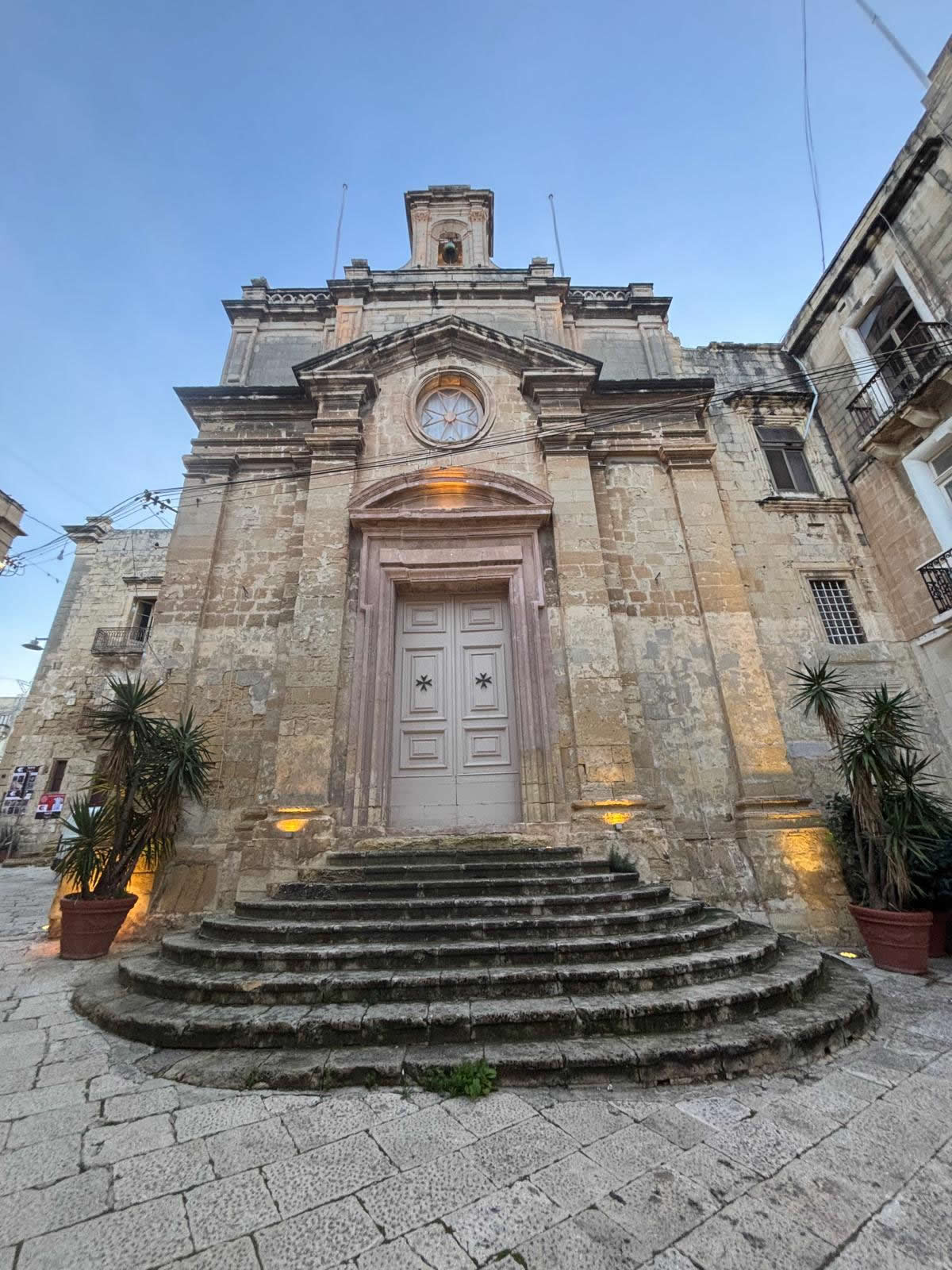
Overview
The Chapel of Our Lady of Damascus in Birgu (Vittoriosa) is popularly known as Tal-Griegi, reflecting its long association with the Greek-speaking and Greek Catholic community that settled in Birgu during the Hospitaller period. Today the chapel survives as a small, historically significant sanctuary integrated within the wider Oratory of St Joseph / church museum complex close to the Collegiate Parish of St Lawrence.
Origins: the earlier Chapel of St Catherine
Sources describing the site consistently point to an earlier Latin-rite chapel dedicated to St Catherine of Alexandria. This earlier dedication matters because it explains why the sanctuary’s later “Damascus” identity is best treated as an evolved devotion linked with community change, rather than as an entirely new foundation created from nothing.
Accuracy note: many summaries focus on the Greek phase; however, a careful narrative should first acknowledge the earlier St Catherine dedication, then trace the chapel’s reassignment and renaming as the community using it changed.
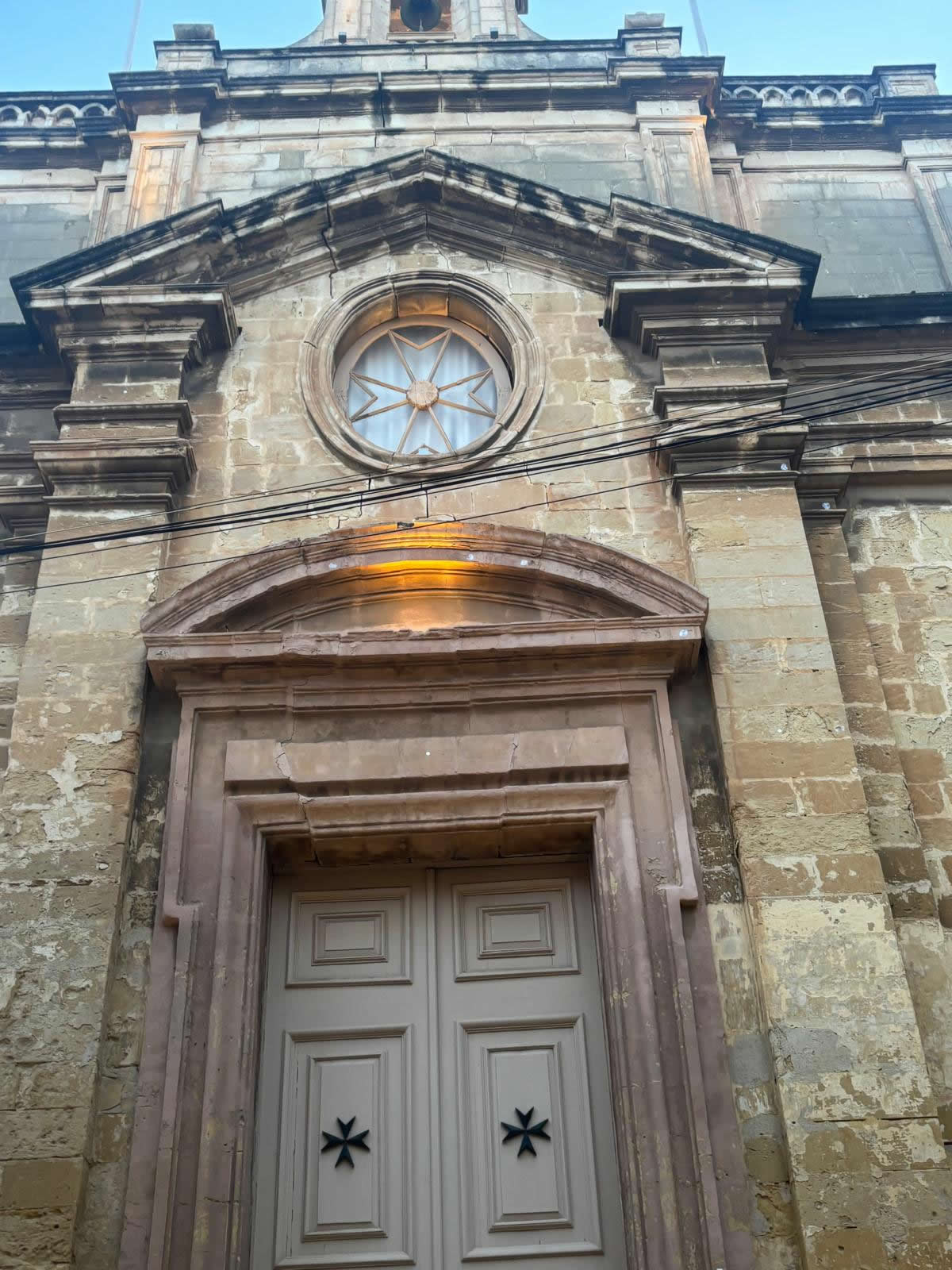
The Rhodiot / Greek community and Byzantine-rite worship
Following the arrival of the Order of St John in Malta in 1530, a contingent of Rhodiots and other Greeks—who had accompanied the Order after the loss of Rhodes—settled in Birgu. The community required places of worship aligned with their tradition. Accounts of Birgu’s churches describe how this Greek community established or used churches for worship according to the Byzantine rite, and the chapel now known as Our Lady of Damascus became part of that lived religious landscape.
The Maltese nickname Tal-Griegi (“of the Greeks”) preserves this memory in local speech long after the community’s parish role changed.
1575: the “Our Lady of Damascus” dedication becomes established
The clearest dated milestone in the chapel’s identity is the 1575 visitation period associated with Inquisitor Pietro Dusina. Accounts of the sanctuary state that the transition from the St Catherine dedication to the title of Our Lady of Damascus is not placed before this era. From this point, the chapel’s public identity is linked with the Marian image and devotion that gave it its enduring name.
Great Siege memory: de Valette’s ex-voto and the de Rohan niche
One of the most compelling strands of the chapel’s story is the tradition that Grand Master Jean Parisot de Valette prayed at this Greek sanctuary during the Great Siege of 1565, and that after victory he returned to leave his sword and hat as ex-voto gifts in thanksgiving. These objects remained associated with the sanctuary and were later set within a baroque niche credited to Grand Master Emanuel de Rohan.
This narrative is important for an emalta.com page because it connects the chapel—not by size, but by memory—to the highest symbolic layer of Birgu’s siege history.
1832: annexation into the Oratory of St Joseph (major structural & functional change)
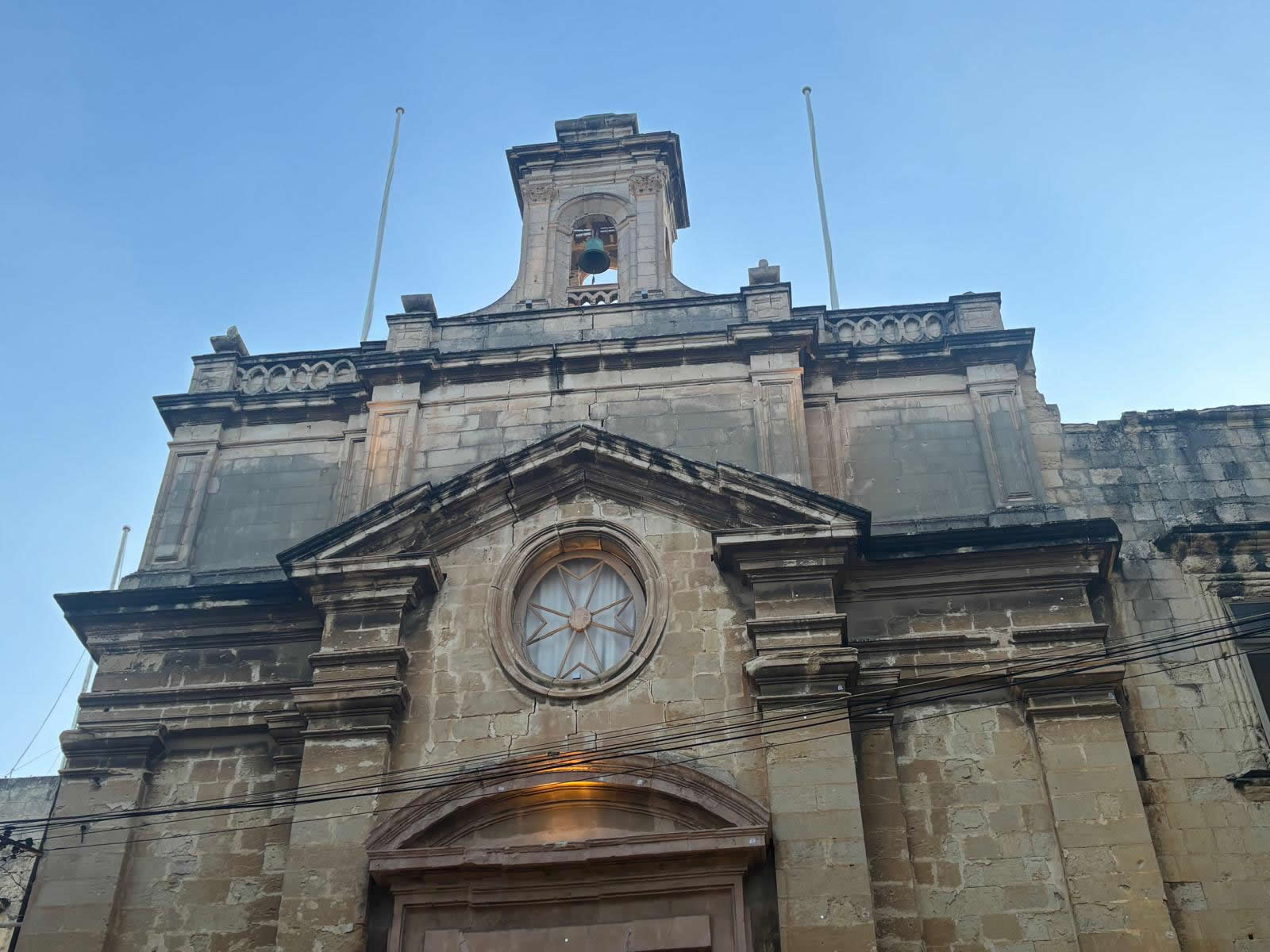
By the nineteenth century the chapel’s function shifted again. A key date is 1832, when the adjoining Oratory of St Joseph was constructed/renewed and the older sanctuary was annexed into the complex as an integrated chapel space rather than a separate, stand-alone church.
This phase can be treated as the principal “architectural modification” in the modern sense: it is when the chapel’s surviving fabric became physically and administratively embedded within the larger oratory/museum environment, while still retaining identifiable older features.
The Marian icon: tradition, replacement, and 2025 scientific dating
The chapel’s identity is inseparable from its Marian image. Earlier accounts record a tradition that an icon associated with “Our Lady of Damascus” was transferred to the Greek church in Valletta in 1587, and that a silver-clad effigy or replacement image remained associated with the Birgu sanctuary. Regardless of how the chapel’s images moved or were replaced over time, the devotion known as ta’ Damaxxena remained rooted here.
In a major recent development, Heritage Malta’s Diagnostic Science Laboratories reported in June 2025 that an icon venerated at the Chapel of Our Lady of Damascus in Birgu is far older than traditionally believed. Scientific investigation (including material analysis and carbon dating of support materials) placed its manufacture around the end of the 13th century to the start of the 15th century. Following the results, and with ecclesiastical agreement, the icon received an updated official title: “Sidtna Marija tat-Tgħanniqa Ħelwa” (“Our Lady of the Sweet Hug”).
Restoration evidence: Heritage Malta’s report also notes that paint analysis distinguished original materials from those arising from historical restorations—important confirmation that the icon (and/or its surface) has undergone conservation or restoration interventions across time.
Use today: a chapel within the Vittoriosa Church Museum / parish museum
The chapel is not typically presented as a standard mass-schedule church today; rather, it forms part of a heritage and museum context connected with the Oratory of St Joseph and the church museum environment in Birgu. In this setting it functions as a preserved sanctuary space where visitors encounter both the devotional tradition and the material history (including the siege-linked objects associated with de Valette).
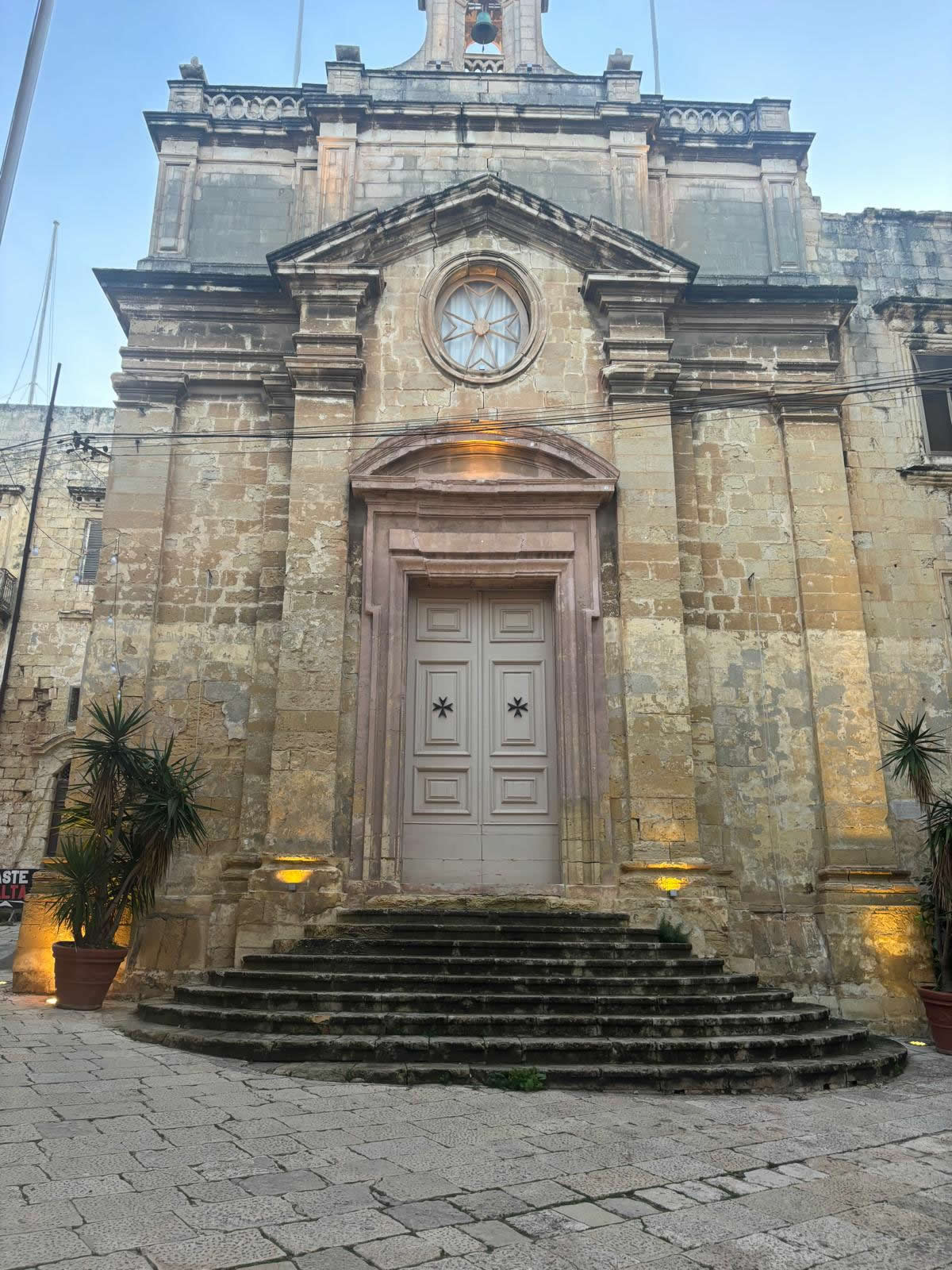
Summary timeline (confirmed milestones)
- Before 1575: earlier chapel on the site associated with St Catherine of Alexandria; later reassigned for Greek-rite use.
- 1530 (context): arrival of the Order of St John in Malta; settlement of Rhodiot/Greek community in Birgu.
- 1575: dedication/title “Our Lady of Damascus” becomes established in accounts connected with Dusina’s visitation era.
- 1565 (devotional tradition): Great Siege prayers and de Valette ex-voto (sword/hat) associated with the sanctuary.
- 1832: Oratory of St Joseph built/renewed; chapel annexed and integrated into the complex.
- 2025: Heritage Malta scientific investigations date the venerated icon to the 13th–15th centuries and record its updated title.